What to expect
Is PRP for hair loss safe?
PRP is made from a small sample of your own blood — no synthetic drug, no donor material, nothing foreign. Like any injection, it can cause minor, short-lived effects such as tenderness, redness or slight swelling at the scalp, which usually settle within a day or two. It's carried out by qualified clinicians who review your health and suitability first — here's exactly what to expect.
Does it hurt?
What the treatment actually feels like
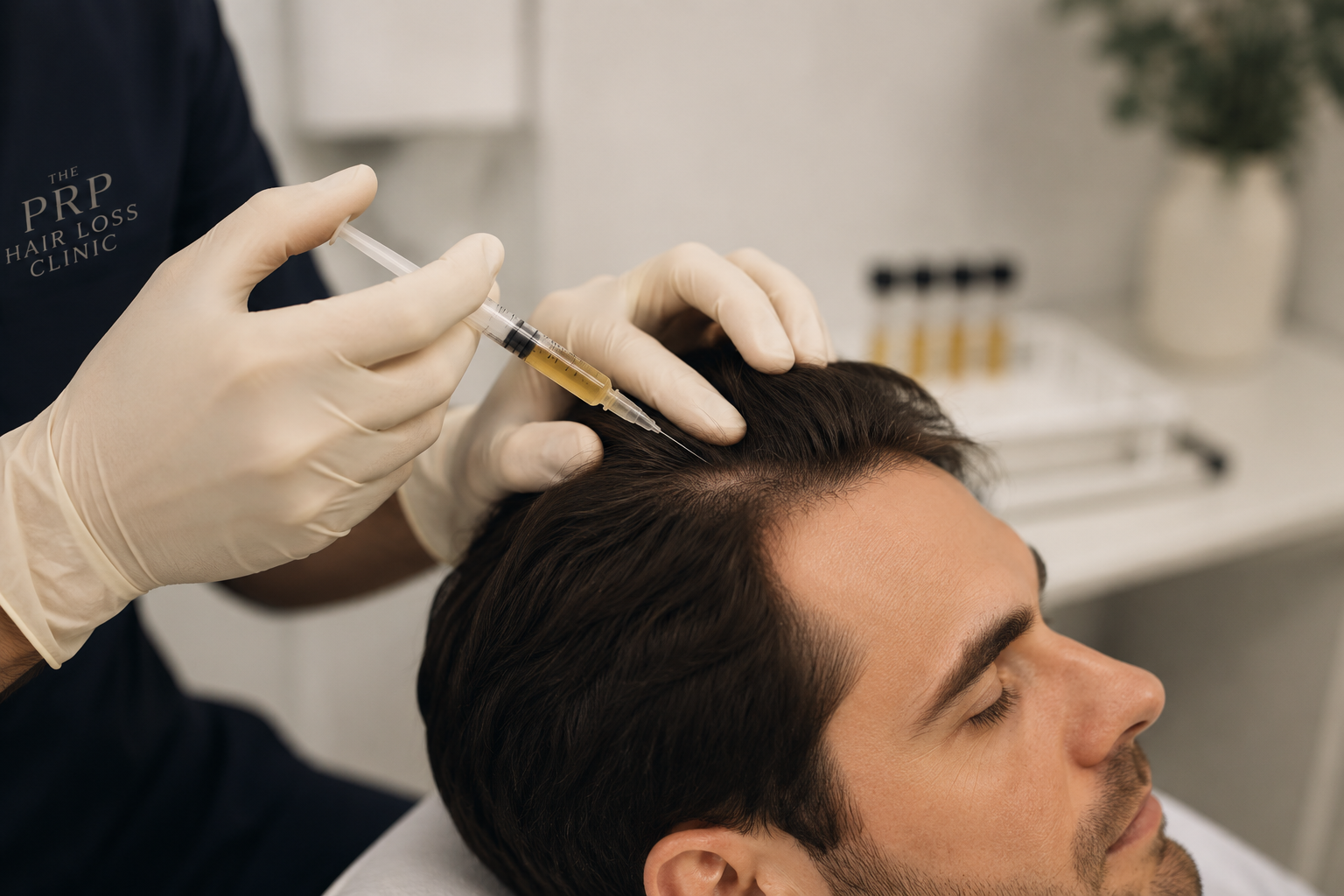
At your appointment, a small blood sample is taken, prepared to concentrate the platelets, then injected across the thinning areas of your scalp — all in a single, short in-clinic visit. The injections are the part most people think about most, so it helps to know what to expect before you arrive.
Most people find PRP briefly uncomfortable rather than painful — a quick sting or pressure as each area is treated. The scalp can be sensitive, so comfort options can be used to help keep you comfortable, and your clinician will talk you through each step if you feel nervous about the treatment.
Side effects
What's normal — and how long it lasts
The side effects of PRP are usually mild, localised and short-lived. Most people experience only temporary scalp tenderness, redness or slight swelling around the treated areas.
Because PRP involves a series of small injections, some sensitivity after treatment is expected. Your clinician will explain what is normal, how to care for your scalp, and when you can return to your usual routine.
Talk through your questionsMild soreness or sensitivity at the injection sites, usually easing within a day or two.
Temporary redness across the treated areas of the scalp, usually settling quickly.
Short-lived puffiness or tightness that typically resolves within a day or so.
Bruising can occasionally occur after injections. Minor infection is rare, and your clinician will explain what to watch for after treatment.
Afterwards
Downtime and aftercare
For most people there's very little to interrupt the day — they head straight back to normal activities, following simple aftercare such as leaving the scalp undisturbed for a short while and holding off on a few things (like vigorous exercise or heat) briefly. Your clinician gives you tailored advice on the day, so you know exactly what to do and what to avoid.
The provider
Your treatment is in expert hands
PRP treatments are provided by Advanced Dermatology, an established clinic group with 20 years of clinical experience and more than 100,000 treatments performed.
Your consultation and treatment are handled by qualified clinicians in a proper clinical setting, with clear treatment planning, careful technique and aftercare explained before you leave.
Frequently asked questions
Is PRP for hair loss safe?
PRP for hair loss is an established treatment made from a small sample of your own blood, so there's no synthetic drug or donor material involved. As with any injection, the main considerations are minor, short-lived side effects such as tenderness or redness, and it should always be performed by qualified clinicians in a proper clinical setting.
Your health and suitability are reviewed at your consultation before any treatment is recommended.
Does PRP for hair loss hurt?
Most people describe PRP as briefly uncomfortable rather than painful — a quick sting as each area of the scalp is treated, which passes in moments.
The scalp is sensitive, so numbing options can be discussed at your consultation to keep you comfortable throughout.
What are the side effects of PRP for hair loss?
The most common effects are mild tenderness, redness or slight swelling at the injection sites, which usually settle within a day or two.
Because PRP involves injections, less common effects such as bruising or, rarely, minor infection are possible. Your clinician explains what to expect for your situation and how to care for your scalp afterwards.
Is there downtime after PRP for hair loss?
For most people there's very little to interrupt their day — they head back to normal activities the same day, following simple aftercare.
You may be asked to leave the scalp undisturbed for a short period and to hold off on a few activities briefly. Your clinician gives you tailored guidance on the day.
Who should not have PRP for hair loss?
PRP isn't right for everyone. Certain health conditions, some medications, and particular blood or scalp issues can make it unsuitable.
That's exactly what your consultation is for — the team reviews your history honestly and only recommends PRP if it's genuinely appropriate for you.
Find out what PRP could achieve for your hair
Your consultation identifies where your follicles can respond, what regrowth you can realistically target, and the treatment course and pricing recommended for your hair.
- Assessment of your hair loss and regrowth potential
- Personalised treatment course, timeline and pricing
- Sydney CBD, Bondi Junction, Brisbane & Gold Coast
- Advanced Dermatology — 20 years, 100,000+ treatments